

In addition, bespoke manufacturing enables companies to address particular consumer demands. A merchant could discover demand for a certain style and design and create an exclusive collection around it.
The firm may differentiate itself by design instead of just competing on pricing. And the capacity to make innovative things may also aid in storytelling. Brands may talk about the inspiration of a collection, the significance of its themes, the creative process or the workmanship.
Jewelry Manufacturers are seeing more and more customers who care about what goes into a product, especially for jewellery which has emotional or symbolic value.
This makes bespoke manufacturing important not just to production but also to branding and market. A well designed bespoke item may become a recognisable element of a brand’s identity. Eventually, unique designs might turn into collections that people connect with a certain firm.
Mangla International: The Future of Custom Jewellery Manufacturing
The future of jewellery making is expected to be an increasingly complex mix of design technology, workmanship, customisation and efficient production.
Consumers are increasingly looking for items that seem personal and unique. Meanwhile, brands are seeking for methods to differentiate themselves with creative design and not just generic items.
Custom manufacturing can address these demands. The path from idea to final product may help us understand the function of Mangla International in this process. For designers, this technique may open up opportunities to explore concepts that would be impossible to realise via traditional collections. This might be an opportunity for businesses to produce distinct items. Custom designs may provide more difference for businesses and help build a unique range.It lets you break out of the box and build items to a certain look or market.
There are numerous carefully planned phases in the path from concept to completed jewellery. Each of them influences the ultimate product and even the tiniest element may change the look, function and quality of the completed item.
Understanding this route gives insight into what makes personalised jewellery making a creative and technical discipline.
How to Develop Your Vision into a Detailed Jewellery Concept
Every personalised jewellery job begins with an idea. Sometimes the idea is quite well developed, other times it is only a rough sketch or a mental picture of the designer. The first issue is to grasp what the author wants the finished work to express.
The custom maker must understand more than the fundamental form of the design. Proportion, size, materials, jewels, surface treatments, utility and intended usage all have to be addressed.
This stage relies largely on communication. It’s important that the customer and the manufacturing team understand the project before production starts.
We will probably see more of the merging of digital design with traditional jewelry-making techniques in the future. While the use of sophisticated modelling and production technology may enhance accuracy, the continued presence of skilled craftspeople will provide the human skills needed to develop and complete complicated designs.
From Sketch to Digital Design & Tech Development
Once the idea is understood, the design may progress into a more detailed stage of development. Jewellery making nowadays typically blends artistic design with digital technology that may explore complicated ideas before they are physically made.
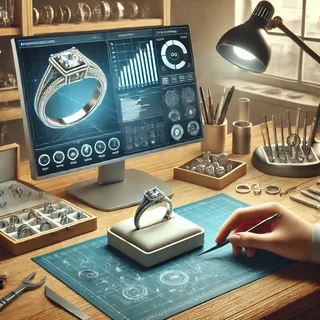
Computer-aided design may assist in developing a first idea into a comprehensive three-dimensional depiction. This allows to assess proportions, dimensions, stone placements, curves, settings and other structural features.
For personalised jewellery, digital development is particularly advantageous since materials are not committed to manufacturing until changes are made.
If it seems too big or too fragile or too technically demanding, it may be tweaked in the digital phase.
This may lessen manufacturing problems and aid to increase the precision of the finished item.
A digital model may also aid in better communication of the design between customer, designer and production team.
This common visual reference helps decrease miscommunication for intricate jewellery. That takes experience with production procedures, materials, gemstone placements, tolerances and finishing.
This is where creativity and technical skill complement each other. The greatest personalised jewellery designs look as good on a screen as they do in real life. They are developed with the physical reality of jewellery making and daily use in mind.
The digital technology supplies the accuracy and visualisation and the workmanship and technical understanding make sure the notion is possible in a final product.
Selecting the Correct Materials and Gemstones
Materials greatly determine the look and character of personalised jewellery. The choice of metal, gemstone, polish and ornamental features must be in accord with the design.
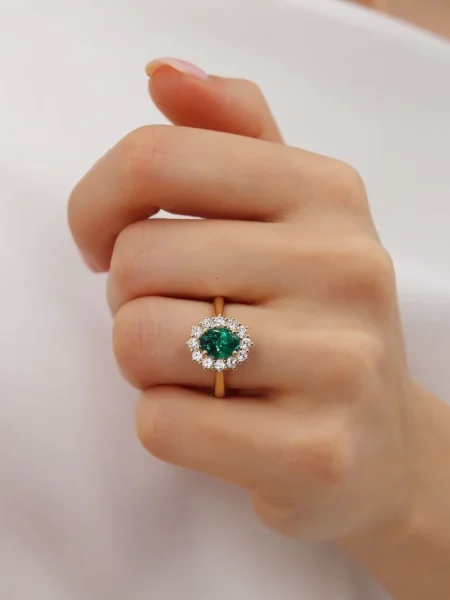
The visual effects may vary from metal to metal. The end look may be affected by the colour, weight, strength and finishing properties. A minimalist design may need a little stone, properly set, whereas a statement piece may include multiple bigger stones as dominant visual features.
The connection of the stone to its setting is also crucial. The setting should retain the gemstone firmly, but also enable the design to emphasise the visual characteristics of the stone. Jewellery is made up of very tiny parts, therefore even little variations may have an effect on the end product.
Dimensions must be properly regulated. Connections need to be secure. The stones have to be placed in the right places. Surfaces will need to be cleaned up to get the look you want.
Custom jewellery could need even more care, as the design might include uncommon forms, elaborate embellishments, or certain proportions that are not present in conventional items.Custom-made jewellery is still precise and distinctive, nevertheless, by the blend of technology and workmanship.
We want to develop something that stays true to the original idea and yet serves the practical expectations of a completed piece of jewellery.
Summary
The Jewelry Manufacturers team must grasp the production characteristics of each material.
Forming, casting, setting, polishing and finishing may have to be approached differently for various materials and components.
This information helps to keep the creative notion attainable without sacrificing the integrity of the art.
Material selection may also help in building a trademark. A recognisable aesthetic may be established for a jewellery brand by the use of certain metals, gemstone combinations, finishes or design features.